
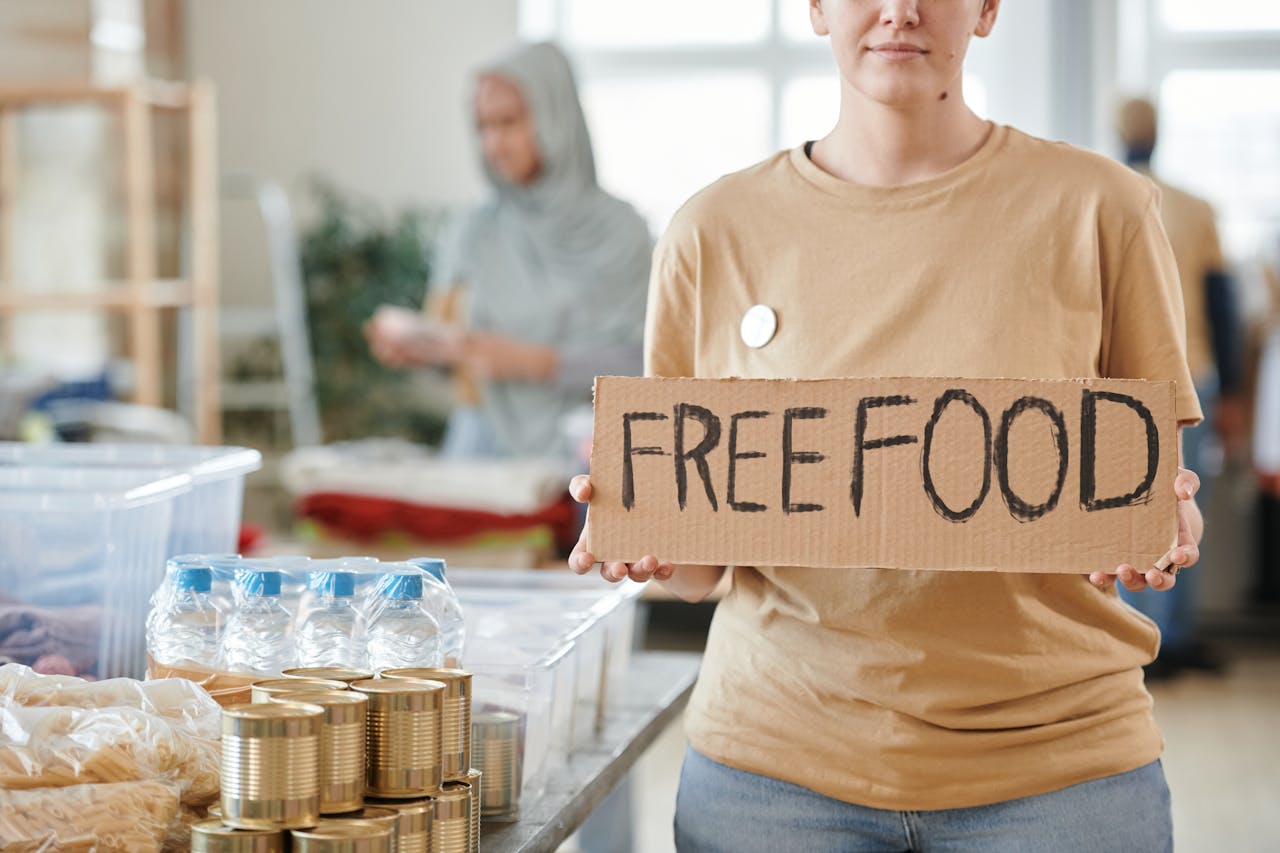
No Family Should Go to Bed Hungry – Cornerstone Pakistan’s Food Distribution and Hunger Relief Programs
Published by Cornerstone Pakistan | April 2026
There is a kind of hunger that statistics cannot fully capture. It is the hunger a mother feels when she watches her children go to sleep without a proper meal. It is the quiet shame of a father who has worked every hour of the day and still cannot put enough food on the table. It is the hollowness in the eyes of a child whose body has stopped growing because there simply was not enough to eat.
In Pakistan today, this hunger is not the experience of a few. It is the daily reality of millions. And in the face of that reality, Cornerstone Pakistan believes one thing above all else: every family deserves to eat. Not occasionally. Not in emergencies. Every single day.
 The Current Situation: A Nation in a Food Crisis
The scale of food insecurity in Pakistan in 2025 and 2026 is not just alarming. It is a national emergency that demands to be named for what it is.
About 11 million people in Pakistan faced severe food insecurity in 2025, with 9.3 million in “crisis” and 1.7 million in “emergency” conditions. To put that in perspective, the “emergency” classification sits just one level below famine on the international hunger scale. These are not distant, theoretical numbers. These are real families, in real communities, across Pakistan, who are going without adequate food right now. New Kerala
The 2026 Global Report on Food Crises has placed Pakistan among the top 10 countries facing acute food insecurity, alongside nations such as Afghanistan, Sudan, and Yemen. That Pakistan finds itself in this company is a devastating reality that every citizen and every humanitarian organisation must take seriously. Organiser Weekly
Pakistan ranks 109th out of 127 countries in the 2024 Global Hunger Index. Nearly half of an average household’s monthly expenditure goes towards food, and 82 percent of the population cannot afford a healthy diet. For the poorest families, those living in flood-affected areas, in rural communities, or in urban slums with no stable income, the gap between what they need and what they can access is growing wider every day. World Food Programme
Inflation, projected to rise to around 6 percent in 2026, has placed further strain on households and reduced access to affordable food. When prices rise and incomes do not, food is the first thing that disappears from the table. Organiser Weekly
Who Is Going Hungry?
Food insecurity in Pakistan does not affect everyone equally. It falls hardest on those who were already living on the edge.
Families displaced by the devastating 2025 floods across Punjab, Sindh, and Khyber Pakhtunkhwa lost not just their homes but their crops, their livestock, and their livelihoods. Residual monsoon flood impacts, drought, and localised insecurity have weakened agriculture and pastoral livelihoods, reduced production, disrupted markets, and squeezed coping capacity for millions of families. UN News
Daily wage workers who earn just enough to feed their families today have no buffer when work dries up, prices spike, or a family member falls ill. Women-headed households, families with disabled members, the elderly living alone, and children in overcrowded urban slums are among the most invisible and most hungry.
In rural areas, the connection between hunger and climate is immediate and devastating. As weather patterns become more erratic, crop yields plummet, driving up food prices and pushing the most vulnerable citizens into deeper poverty. A farmer whose harvest has been destroyed by flooding or drought does not just lose income. He loses the food that was meant to feed his family throughout the year. The Nation
Seasonal factors compound the crisis further, with the lean season reducing farm labour and income opportunities, and in some areas, harsh conditions constrain access and livelihoods. For the poorest families, the lean season is not a temporary inconvenience. It is a period of genuine, dangerous hunger. UN News
What a Ration Pack Means to a Family
People who have never gone without food sometimes struggle to understand what receiving a ration pack truly means to a family in need. It is not just flour, rice, oil, and lentils in a bag. It is far more than that.
It is a mother’s relief at not having to choose which child eats today and which one does not. It is a father’s dignity restored, even briefly, when he can provide. It is a child who goes to school with a full stomach and can actually learn. It is an elderly grandmother who does not have to silently go without so that the children can eat. It is a family that can face the week ahead with just a little more strength and a little more hope.
Regular food distribution through ration drives is one of the most direct, tangible, and life-changing interventions a humanitarian organisation can provide. There is no complexity in it. A family is hungry. We bring food. Lives are sustained. And in that simplicity lies enormous power.
Cornerstone Pakistan’s Approach to Food Distribution
At Cornerstone Pakistan, our food distribution and hunger relief programs are built on a foundation of regularity, dignity, and genuine community connection.
We believe that emergency food distribution alone is not enough. A ration pack delivered once in a crisis moment helps. But a ration pack delivered consistently, month after month, is what allows a struggling family to survive a bad season, recover from a disaster, or hold together while rebuilding their livelihood. That is why our programs are designed for sustained, regular support, not one-off interventions.
Our approach is guided by several core principles. We identify the most vulnerable first, focusing on families that formal relief systems often miss: remote communities, families without male breadwinners, households with chronically ill members, and communities in hard-to-reach areas. We distribute with dignity, ensuring that every family receives assistance respectfully and without stigma. We listen to communities, adapting the content of ration packs to local dietary needs, cultural practices, and seasonal requirements. And we combine food support with complementary programs including hygiene kits, clean water access, and livelihood assistance, because hunger rarely exists in isolation from other forms of hardship.
Hunger Relief in Emergencies
When disaster strikes, the need for food relief becomes urgent and immediate. Cornerstone Pakistan maintains an emergency response capacity to deploy food assistance rapidly in the wake of floods, droughts, and other crises. Hot meal distribution for families in relief camps, emergency food packs for displaced households, and targeted feeding programs for children and nursing mothers are all part of our emergency response toolkit.
But we also know that the emergency does not end when the floodwaters recede or the cameras leave. Recovery takes months. Livelihoods take years to rebuild. Families who are struggling six months after a disaster are just as hungry as they were on day one, even if the world has moved on. Our post-emergency food support programs are designed to bridge that gap, providing continued relief during the long months of recovery when external attention has faded, but the need remains.
The Bigger Picture: Why Regular Support Matters
Hunger is not only a crisis. For millions of families in Pakistan, it is a chronic condition. It is the background reality of a life lived in poverty, where every month is a struggle and every unexpected expense means going without food.
This is why Cornerstone Pakistan’s ration drives are not just disaster responses. They are regular, planned, community-based food support programs that operate month after month, reaching families who are not in the news but who are quietly, consistently going without.
Pakistan struggles with high multidimensional poverty, and millions of families cannot afford a healthy diet. Regular ration support does not solve the structural causes of poverty. But it keeps families nourished, keeps children in school, keeps mothers healthy enough to care for their families, and keeps hope alive while longer-term change is built. World Food Programme
It is the difference between a family that survives and a family that does not.
A Call to Action
Pakistan has been named among the ten most food-insecure countries in the world. That is not a statistic to scroll past. It is a call to every person who has enough food on their own table to ask: what am I doing for those who do not?
Cornerstone Pakistan is committed to answering that question with action. Every ration drive we run, every hunger relief program we deliver, every family we reach is our answer. But we need your support to reach further, to go deeper, and to sustain this work through every season.
Your contribution to our food distribution programs ensures that more families receive regular ration support. It ensures that when disaster strikes, we are ready to respond immediately. It ensures that no child in the communities we serve has to face another day without a proper meal.
Because food is not a privilege. It is a right. And at Cornerstone Pakistan, we will keep fighting until every family we can reach is able to exercise that right.
To support Cornerstone Pakistan’s Food Distribution and Hunger Relief Programs:
📧 info@cornerstonepk.org 📞 +92 346 2344829 | +92 344 2775492 📍 House No. 108, Street No. 08, Sector F/48, Francis Town, Korangi 2½, Karachi
Cornerstone Pakistan. Because no family should go to bed hungry.